
In this guide
Short answer: fixed cameras are usually the backbone for continuous coverage, while PTZ cameras are valuable for reach, active monitoring and incident investigation. A PTZ should not be treated as a universal replacement for fixed cameras because it can only look in one direction at a time. Many effective commercial systems use both.
The PTZ-versus-fixed question is common in overseas procurement because a PTZ appears to offer more coverage from fewer devices. The decision becomes clearer when the project separates two jobs: recording what is always happening, and allowing an operator to investigate a distant or moving event.
1. What a fixed camera does well
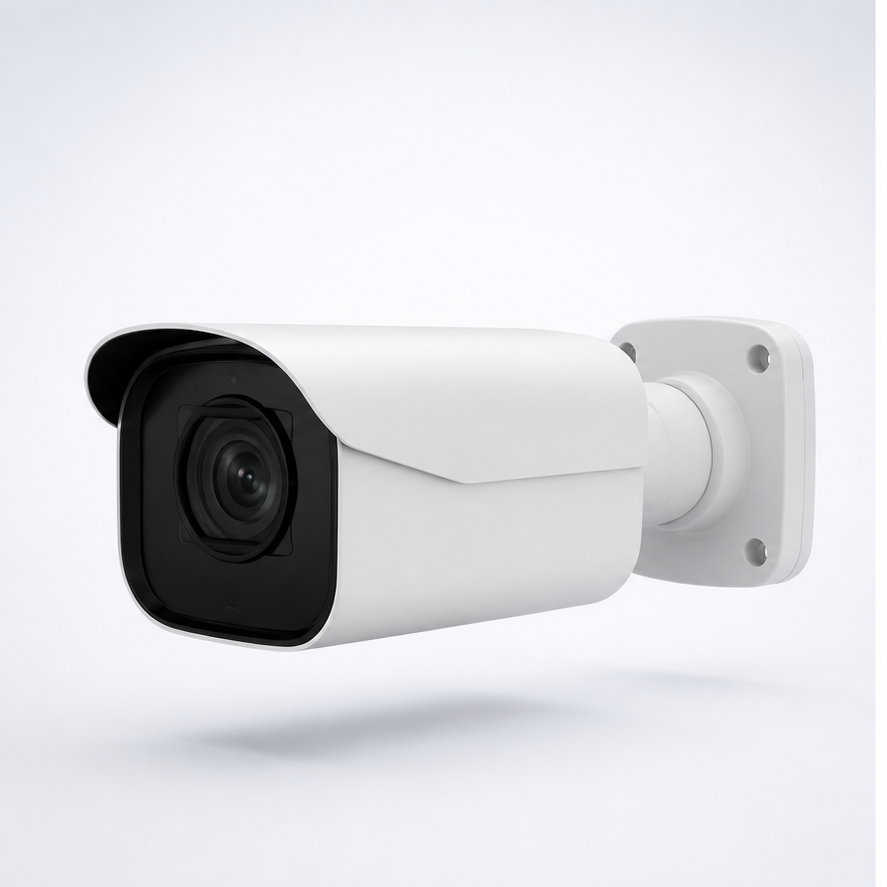
A fixed bullet, dome or turret camera maintains a defined field of view. It is therefore useful for entrances, cash points, loading bays, corridors, production lines and perimeter sections where the customer needs a dependable record of one zone.
- Continuous coverage of a known area
- Predictable evidence during an incident
- Simple commissioning and stable camera views
- Lower mechanical complexity than a moving camera
- Easy mapping of cameras to zones in a project handover
Fixed cameras still require careful placement. Adjacent views may need overlap, and a wide lens should not be selected merely to reduce camera count if the customer needs identification at a distant point.
2. What a PTZ camera does well
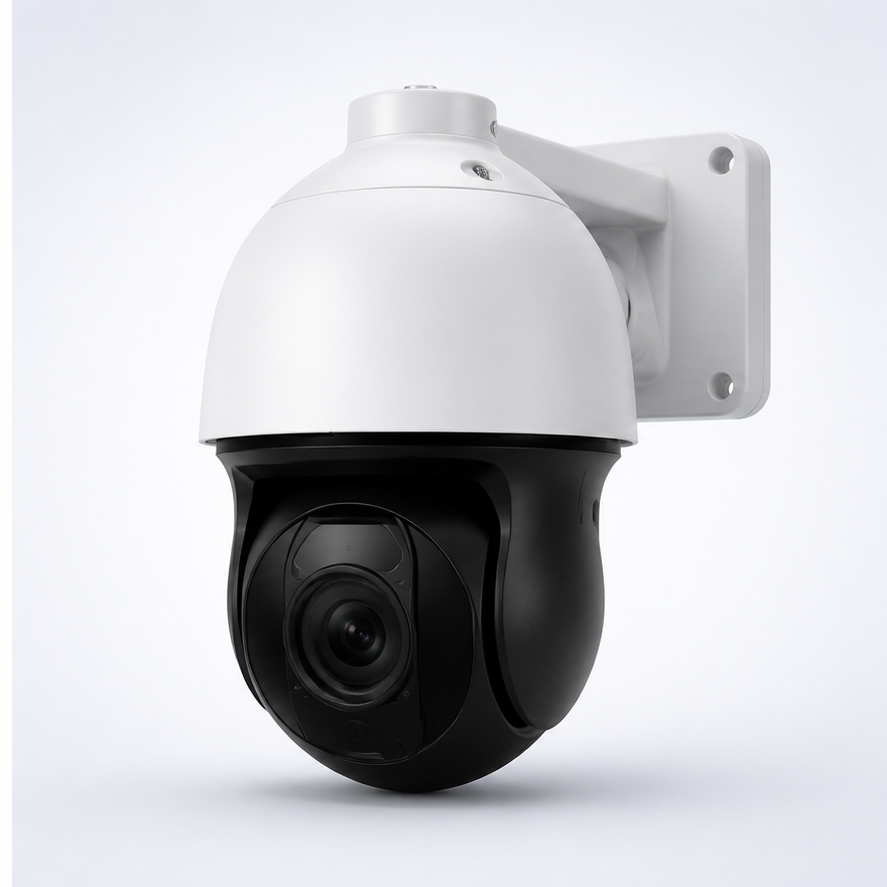
A PTZ camera can pan, tilt and use optical zoom to inspect a larger area under operator control or a programmed tour. It is useful at yards, long perimeters, road approaches, stadium-like spaces, ports and industrial sites where an operator needs to look beyond the normal fixed views.
PTZ value comes from reach and response, not from permanently recording every direction. Presets, guard tours, manual control, tracking behavior and zoom performance should be tested against the customer workflow. During factory testing or commissioning, verify preset accuracy, movement smoothness, focus after zoom and the time required to reach a target.
3. The blind-spot question
A moving camera cannot monitor its entire possible field at the same moment. If it is looking at Gate A, an event at Gate B may not be recorded in useful detail. This is why fixed cameras should cover critical zones that must never disappear from the recording view.
A practical design often looks like this: fixed cameras watch doors, loading points and perimeter segments; a PTZ is mounted at a strategic high point to investigate alarms or follow a vehicle. The NVR records both, while the operator uses the PTZ as a second layer of situational awareness.
Not sure whether your site needs PTZ?
Send a site plan, perimeter length, target distance and monitoring workflow. We can compare a fixed-camera layout with a fixed-plus-PTZ option.
4. Compare the main buying factors
Coverage
Choose fixed cameras for permanent zone coverage. Choose PTZ when the benefit of changing viewpoint is meaningful and an operator or event system can direct the camera.
Identification distance
For a distant target, check optical zoom, sensor performance, lighting and mounting stability. A long zoom number alone does not guarantee usable identification. Confirm the target size and lighting at the planned distance.
Lighting and weather
Outdoor PTZ installations need appropriate weather protection, mounting, power and surge considerations. Fixed cameras also need correct IR planning and protection from glare, rain and nearby surfaces.
Installation and maintenance
PTZ cameras include moving mechanisms and may require more attention to presets, cleaning, firmware compatibility and mounting stability. Fixed cameras are not maintenance-free, but their views are simpler to verify during routine inspection.
Budget and total system fit
Replacing several fixed views with one PTZ can reduce hardware count while increasing the risk of missed events. Compare the cost of cameras, poles, cabling, NVR channels, installation, operator time and evidence requirements—not only the unit price.
5. Application examples
Warehouse and logistics yard
Use fixed cameras at dock doors, pedestrian gates and loading transactions. Add a PTZ for long vehicle approaches or a large yard where the operator needs to inspect activity. Make sure the fixed views remain useful when the PTZ is pointed elsewhere.
Factory perimeter
Fixed cameras can create a repeatable perimeter record, especially where risk zones are known. A PTZ can help investigate an alarm, read a distant scene or support a security guard. Presets should be designed around actual response routes.
Construction or temporary site
A PTZ may provide flexible coverage during changing site phases, but temporary cabling, power, network reliability and mounting vibration must be reviewed. Fixed cameras remain useful for high-risk access points.
6. Questions to answer before ordering
- Which areas require continuous evidence without operator action?
- What is the maximum target distance and required detail?
- Is there a trained operator, or will the PTZ run an automatic tour?
- What happens if the PTZ is looking in the wrong direction during an incident?
- Are power, network, mounting and maintenance conditions suitable?
- Can the NVR record the selected streams and support the required playback?
Frequently asked questions
Is a PTZ better than a fixed camera?
Neither is universally better. Fixed cameras are better for stable, continuous coverage; PTZ cameras are better for active investigation and long-range viewing. The correct choice depends on the scene and operating model.
Can one PTZ replace multiple cameras?
It can reduce the number of viewpoints in some low-risk or operator-led applications, but it cannot watch every direction at once. Critical zones normally still need fixed coverage.
Do PTZ cameras need an operator?
They can use presets, tours or automated tracking, but an operator often makes the value of a PTZ more practical. Automated movement should be tested and should not be assumed to capture every incident.
What should be tested before shipment?
Confirm pan and tilt range, optical zoom, focus, presets, guard tour behavior, low-light image, network access, NVR compatibility and the approved accessories. Record the test result against the exact model and firmware.
Conclusion
The strongest PTZ decision begins with coverage requirements. Use fixed cameras to protect the views that must always be recorded, then add PTZ capability where reach and investigation improve the response. This balanced architecture is easier to explain to customers, easier to commission and less likely to create blind confidence from a single moving camera.
Send your site requirements
Tell us the application, target distance, number of critical zones, monitoring method and preferred camera type. We can prepare a practical fixed, PTZ or hybrid recommendation.
What to carry into your project discussion
- Understand when fixed cameras, PTZ cameras or a combination provide the most reliable coverage for warehouses, yards, entrances and perimeter security.
- Review 1. what a fixed camera does well before finalizing a product shortlist.
- Review 2. what a ptz camera does well before finalizing a product shortlist.